OPERA INFORMATION
NAME: “Seis Noches Lúgubres” (“Six Gloomy Nights”)
COMPOSERS: Micro-opera project with 6 different composers: Abel Parra Soto, Miguel Martín Fernández, Sergio García Coretti, Jesús Alises, Amanda Garrido Vitorino and Miriam Sanz Ortega
BASED ON: It is not related to the work «Noches Lúgubres» by José Cadalso, but it could have some influence.
GENRE: Micro-opera
ORIGINAL LANGUAGE: Spanish
PREMIERE: 3 March 2022
STYLE: Contemporary Opera
What is a micro-opera?
The concept of micro-theater, applied to opera, is called a micro-opera.
These are very short compositions (no more than 10-15 minutes) that tell a complete story.
This concept was used in this small-format opera to create a unique piece: a story linked through six micro-stories. In this way, each «scene» of the opera was a micro-opera, composed by a single composer and with a completely independent story. The intelligence of the stage director, Diego Carvajal, ensured that the order of the micro-operas generated a common thread for an overarching story that united them all: the «humanity» of humankind.
This brilliant idea led to the creation of the work “Seis Noches Lúgubres” («Six Gloomy Nights») which is itself composed of six micro-operas (one opera per night):
- No quiero soñar (I don’t want to dream) composed by Abel García Parra
- Cuatro calles. Diez minutos (Four Streets. Ten minutes) composed by Miguel Martín Fernández)
- Tren de cercanías (Suburban train) composed by Sergio García Coretti
- San Manuel (Saint Manuel) composed by Jesús Alises
- Colapso (Collapse) composed by Amanda Garrido Vitorino
- Officio Parare (Stop Office) composed by Miriam Sanz Ortega
Each one features its own musical style, adapted to the dramatic and vocal content of each story.
SYNOPSIS
«Seis Noches Lúgubres»
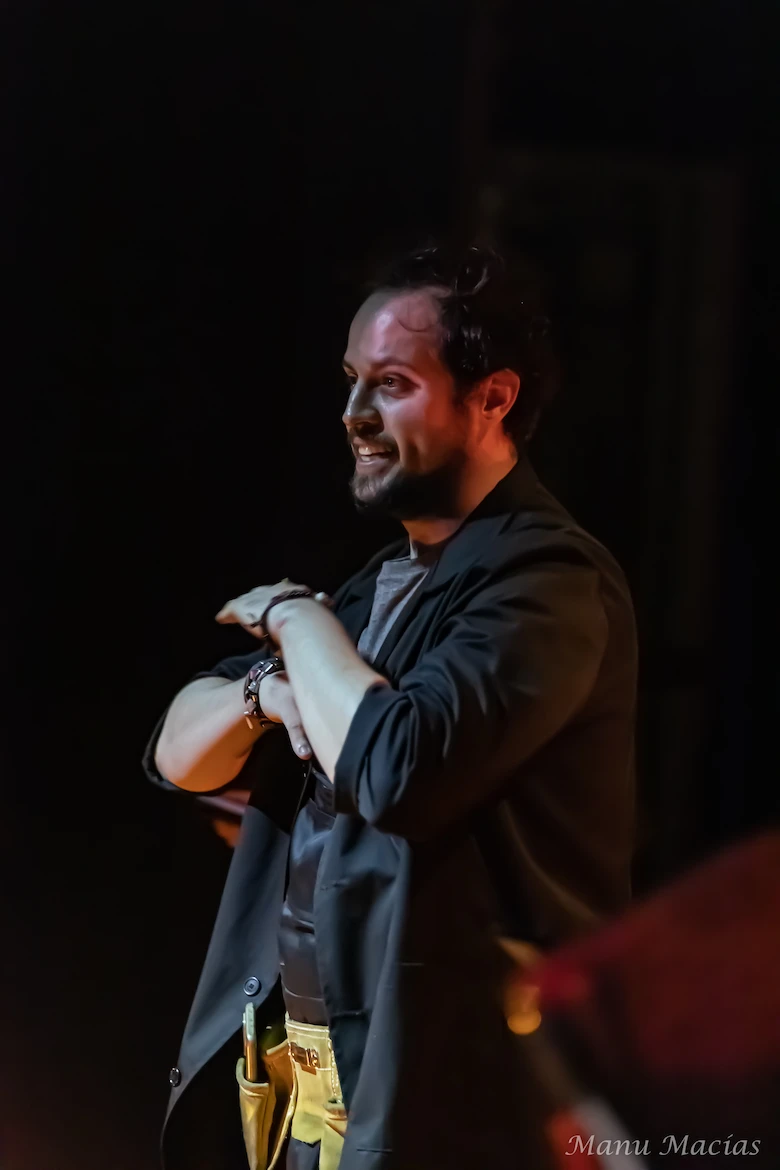
Diego Carvajal’s version of “Seis Noches Lúgubres” offers a journey filled with conflict and pivotal moments. In the play, the “Escenógrafo” (Set Designer) is the central figure of each harrowing night. This Escenógrafo experiences firsthand, as well as through his own actions as a spectator, various events that prompt the audience to reflect on the dangers of daily life and how we confront them. The music, laden with surrealism and abstraction, transports us to the scenes as if we were part of them. There are car noises, screams, bells, and even a dramatic musical collapse. This version leaves no one indifferent.
The Escenógrafo begins his first night recalling the moment he lost his wife in a car accident. A moment that marked his life and drove him to madness.
Later, the same Escenógrafo is put to the test the following night, grappling with indecision, uncertainty, and the dangers that can arise at the intersection of four streets in just ten minutes. The waiting, the tension, the exchange of glances, a blink… The fleeting nature of a moment and the decision-making process sometimes play a significant psychological role.
The following night narrates the helplessness of witnessing a fight like any other passenger on a train. The different moments of tension and brutality, and how a life can be taken in an instant.
On the fourth night, the Escenógrafo goes to church to confess. He encounters a man of faith who is questioning his own religiosity. Priests are meant to be bridges between the faithful and God, but what happens if a priest has a crisis of faith? Who helps him?
The fifth night represents the pinnacle of the Escenógrafo’s life. Everything is going wrong, and everything is only going to get worse. Nothing makes sense, and he has few reasons left to believe in life. There is no love, no stability, no peace, no spiritual refuge, only chaos… and a profound breakdown.
The final night is the end, and the decision anyone would make after losing all hope.